 Solar Company
Quick Answer
Most solar panels in Sonoma County continue producing power well beyond their 25-year product warranty. The typical degradation rate is about 0.5% per year, verified by the National Renewable Energy Laboratory. For Santa Rosa homeowners, an inverter swap or battery addition almost always delivers better ROI than a full panel replacement. Wildfire ash, coastal fog, and vineyard dust accelerate surface wear if panels are not professionally maintained. Start with a local expert assessment before making any decision.
TL;DR
- Most quality panels retain close to 90% output at year 20. Full degradation detail in the section below.
- Inverter replacement almost always delivers better ROI than a full array swap. See the cost table below.
- Sonoma County’s ash-and-fog cycle creates surface wear that standard maintenance guides do not account for.
- Under California’s current net billing tariff, battery storage now outperforms raw panel capacity for most households.
- Plan any reroof and solar work together to reduce permit fees, engineering costs, and scheduling delays.
- If your installer has gone quiet, or your system is 10-plus years old, a performance audit is the right first step.
If your Santa Rosa home has carried a solar panel system for a decade or more, you have probably wondered whether those panels are nearing the end of their useful life. Reasonable question, especially after recent wildfire seasons layered ash across rooftops from Fountaingrove to Bennett Valley. Most well-built systems keep generating clean energy far longer than homeowners expect. The real question is not whether your panels will fail. It is whether your system is still optimized for the way California utility billing works today.
How Long Do Solar Panels Last in Sonoma County?
A quality solar installation in Sonoma County will typically produce electricity reliably for 25 to 35 years or longer. Panels degrade gradually each year rather than failing suddenly. A 25-year product warranty is a manufacturer’s commercial commitment, not an expiration date. Systems well into their third decade still contribute meaningfully to household energy production across the North Bay.
Panels are solid-state devices with no moving parts. UV exposure, thermal cycling, and moisture cause microscopic changes inside silicon cells over time: slow, predictable, and manageable with proper maintenance. The mistake most homeowners make is treating the warranty period as a deadline. It is not.
- 25 to 35 years is the realistic productive lifespan for a quality Tier 1 system.
- Gradual output loss, not sudden failure, is the normal aging pattern.
- Third-decade systems in Santa Rosa regularly show output within 20% of original capacity and continue contributing to household energy budgets.
North Bay permit requirements differ from standard California guidelines, and local utility billing rules continue to evolve. Homeowners considering first-time installation alongside an aging system can review residential solar service options to understand what a modern system design looks like compared to a decade-old installation.
What Is the Solar Panel Degradation Rate and When Does Hardware Need Replacing?
The National Renewable Energy Laboratory puts the median degradation rate at approximately 0.5% per year, meaning most systems retain close to 90% of original output at year 20. The panel array itself is rarely the component that needs replacing. Inverters wear out first, typically within 10 to 15 years, and replacing one extends the productive life of the whole system.
Microcracks form inside silicon cells when panels expand and contract through thermal cycles, but these develop slowly and predictably. The hardware failure that actually costs Sonoma County homeowners money is replacing a fully functional panel array when only the inverter needs attention.
- String inverters typically need attention within 10 to 15 years, well before the panels become an issue.
- Microinverter-based systems allow single-unit replacements without disrupting the rest of the array.
- A new inverter on an existing quality array extends productive lifespan by a decade or more at a fraction of full-replacement cost.
Before committing to any hardware decision, Santa Rosa homeowners should review battery and energy storage options alongside inverter replacement, the two upgrades are often scheduled together to reduce permit and labor costs under the City of Santa Rosa’s current plan-set requirements.
How Does Sonoma County’s Climate Affect Solar Panel Performance?
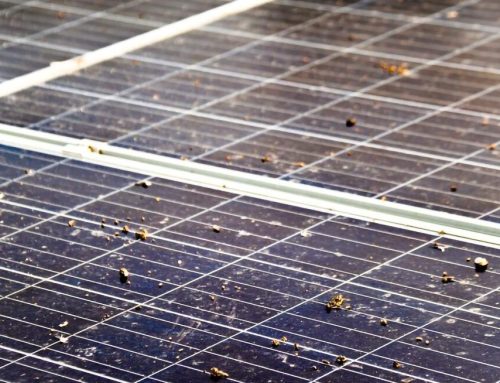
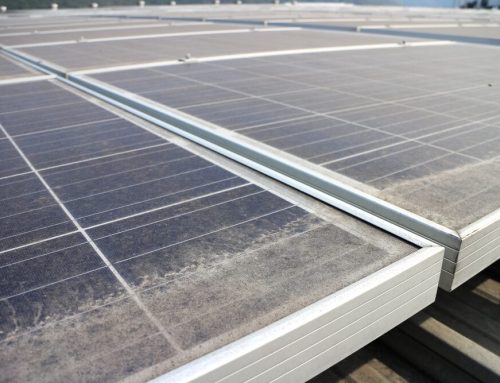
Santa Rosa’s combination of coastal marine layer, vineyard dust, and seasonal wildfire ash creates a localized wear cycle that standard solar maintenance guides do not address. Morning moisture from the marine layer binds particulates and ash to the panel glass. When midday heat bakes that film onto the surface, it causes micro-shading and thermal hot spots that accelerate lasting cell damage.
Unlike uniform dust, this bake-on mixture resists rain-clearing and builds cumulative stress across active cells. The cells forced to compensate for shaded neighbors run hotter, which shortens their effective lifespan. Professional cleaning on a regular schedule is not optional in this climate. It is protective maintenance.
- Spring Lake Regional Park and Highway 12 corridors experience this ash-and-fog cycle most intensely during late summer.
- Bennett Valley and Oakmont homeowners face added shading from mature tree canopies that narrows the productive solar window beyond the climate effect.
- Fountaingrove homes rebuilt after 2017 are now approaching the age where a battery integration review makes financial sense.
Santa Rosa requires a dedicated building permit with a full plan set any time panels are removed and reinstalled, even when returning to the same position. Our crew serves the full North Bay, including Marin County and Napa County, and processes these permits in-house on every project rather than outsourcing the plan-set work.
Is It Better to Repair, Upgrade, or Replace a Solar System in Sonoma County?
For most Sonoma County homeowners, a full panel replacement is not the right call. Adding battery storage or replacing the inverter delivers better return on investment under California’s current net billing tariff (NEM 3.0). The shift away from retail-rate daytime export credits means raw panel volume no longer drives the strongest returns.
Under the old net metering rules, surplus daytime power sold back to the grid at retail rates made oversized systems attractive. That has changed under California Public Utilities Commission rules. Daytime export credits are now significantly lower. A moderately sized array paired with battery storage that covers PG&E’s peak evening rate window, roughly 4 PM to 9 PM, consistently outperforms an oversized daytime-only system on a cost-recovery basis.
One consideration most providers skip: removing panels for a reroofing project triggers permitting requirements and labor costs that vary sharply between national corporate contractors and in-house local crews. That cost difference is captured in the table below.
California’s CPUC NEM 3.0 decision formalized the lower export-credit structure now in effect across PG&E territory. Understanding how that ruling affects your specific system size and usage profile is the starting point for any upgrade conversation.
Solar Service Cost Estimates for Sonoma County
| Service | Estimated cost | Notes |
|---|---|---|
| Inverter replacement (string) | $1,500 to $3,000 | Varies by system size |
| Enphase microinverter upgrade | $2,000 to $5,000 | Per system; includes labor |
| Battery storage addition | $8,000 to $15,000 | Before applicable tax credits |
| Full panel array replacement | $15,000 to $30,000 | Rarely necessary for Tier 1 |
| Remove and reinstall during reroof | $3,000 to $6,000 | Corporate chains; local costs vary |
Figures may vary. Verify with a local provider.
Sonoma County Homeowners FAQ
What happens to solar panels after 25 years?
They keep producing electricity. Most quality panels retain around 80% of their original capacity at year 25 and continue generating power well beyond that. The 25-year mark is a warranty milestone, not a failure point.
Does Sonoma County’s climate shorten solar panel lifespan?
Yes, if panels are not maintained. The ash-and-fog wear cycle covered above is the main local accelerant. Professional cleaning on a regular schedule prevents the bake-on buildup that causes micro-shading and hot spots.
Can I replace just one defective panel instead of the whole system?
Yes, with a microinverter-based system. A single panel swap is straightforward and does not affect the rest of the array. String inverter systems require more planning but can still support partial replacements in most configurations.
Is upgrading worth it under California’s current net billing rules?
Yes, particularly when the upgrade includes battery storage. As covered in the ROI section above, NEM 3.0 has shifted the math away from daytime-only production.
How do I know whether I need a replacement or just an upgrade?
Start with a system check. If output is within normal range and the inverter is functional, a targeted upgrade nearly always beats a full replacement. Request an upgrade consultation to get a clear assessment from a local in-house team.
Ready for a Straight Answer on Your Sonoma County System?
If your panels are aging, your roof is approaching 15 years, or your utility bills have stopped making sense, a no-pressure performance audit is the right move. Our in-house engineering crew has worked this region since 1977 and knows every permit office, utility rule, and local condition involved. Schedule a consultation today and find out exactly where your system stands.
Written by Suntegrity Solar Team | 49+ years designing and servicing residential and commercial solar systems across Sonoma, Napa, and Marin counties | Enphase Platinum Installer, C-10 and C-46 licensed, locally owned since 1977.