 Solar Company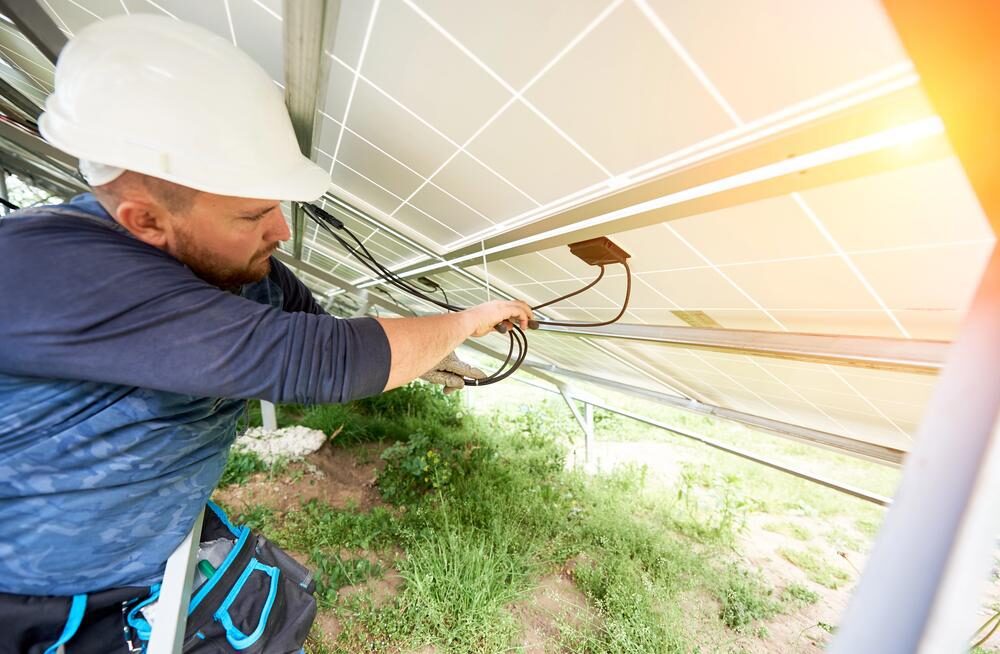
Direct Answer
A solar panel wiring guide for your battery backup explains how series, parallel, and series-parallel wiring configurations determine your system voltage, charging efficiency, and reliability during PSPS events in Sonoma County. Proper wire sizing, disconnects, and overcurrent protection are essential to meet the NEC residential solar wiring code and reduce fire risk in high-heat, wildfire-prone conditions. DC‑coupled battery systems are generally more efficient than AC‑coupled setups because they avoid multiple power conversions between your panels and batteries. Working with a local in-house engineering team ensures your solar panel wiring, battery management system (BMS), and inverter are correctly matched to your home’s backup power needs.
- Series wiring increases array voltage for high‑voltage lithium batteries, while parallel wiring keeps voltage the same and increases current.
- Most modern residential storage systems favor string (series) wiring to meet battery and inverter voltage windows efficiently.
- DC‑coupled batteries typically deliver higher round‑trip efficiency than AC‑coupled systems by reducing conversion losses.
- Standard residential solar PV installs commonly use 10 AWG–12 AWG PV wire with MC4 connectors sized for array current and NEC safety margins.
- A 10 kWh home battery typically pairs with several kilowatts of solar to reliably recharge in one sunny day, depending on usage and climate.
- Sonoma County homeowners should prioritize code-compliant wiring, PSPS-ready design, and local engineering expertise for long-term reliability.
Sonoma County climate conditions require solar wiring safety tips that account for high heat and potential moisture, especially during extended summer heat waves and wildfire season. Modern solar energy storage system diagrams include specialized protection to ensure the battery system remains operational during extreme weather and grid outages.
Suntegrity Solar has completed over 1,000 installations since 1977, providing the local expertise needed to navigate Sonoma County building codes. If you live in Santa Rosa, Petaluma, or the Napa Valley, you know that energy independence isn’t just a luxury; it’s a necessity.
Solar Power System Reliability in Sonoma County
Between the rising costs of PG&E and the ongoing threat of Public Safety Power Shutoff (PSPS) events, when utilities temporarily shut off power to reduce wildfire risk, Sonoma County homeowners are increasingly turning to battery storage to keep the lights on.
The performance of a backup system depends entirely on how your solar panels are wired to feed it. As a local, family-run team of engineers serving the North Bay since 1977, we’ve seen how a properly configured wiring setup can be the difference between a system that merely looks good and one that actually powers your whole home when the grid fails.
This guide breaks down the technical details of solar panel wiring to help you maximize your investment and secure your energy future. High energy bills and frequent Public Safety Power Shutoffs (PSPS) in Sonoma County make a reliable solar battery system essential.
When you add energy storage to your home, the way you wire solar panels impacts how quickly your batteries charge and how long they last. This guide explains the technical details of solar panel wiring to help you achieve energy independence with a code-compliant, utility-approved design.
Understanding Solar Panel Wiring in Series vs Parallel
Residential solar panels wired in series vs parallel determine the electrical output sent to your inverter and battery bank. Wiring solar panels in series adds the voltage of each panel together while keeping the amperage the same. Parallel wiring adds the amperage together while keeping the voltage the same as a single panel.
Industry data shows that most modern residential battery storage installations use series or “string” wiring to meet the high voltage requirements of modern lithium-ion batteries and hybrid inverters. In a solar panel series wiring diagram, the positive terminal of one panel connects to the negative terminal of the next.
This creates a high-voltage solar string wiring setup that is highly efficient for transferring power over long distances from your roof to your battery backup system. A solar panel parallel wiring diagram is used when you need to keep the voltage low but increase the current.
This requires a combiner box for solar panels to safely merge the high current before it reaches the charge controller. Choosing the right solar panels and wiring method depends on the specific battery management system (BMS) and the inverter solar panel connection you use.
Getting this configuration right means your system can deliver the voltage and current your battery and inverter need without wasting energy as heat in the wiring.
| Wiring Type | Voltage Effect | Current Effect | Best Use Case |
| Series Wiring | Increases (Sums) | Stays the same | High-voltage battery systems and longer wire runs. |
| Parallel Wiring | Stays the same | Increases (Sums) | Small systems or shaded roofs |
| Series-Parallel | Increases | Increases | Large whole-home energy systems that balance voltage and current |
Solar PV Wire Gauge and Safety Components
The solar PV wire gauge (AWG) you choose must handle the maximum current of your array without overheating. Using a wire that is too small can lead to significant energy loss and potential fire hazards, especially in high-heat regions like Sonoma County.
Standard residential installations typically use 10 AWG or 12 AWG PV wire equipped with a weather-resistant MC4 connector for solar wiring. Safety is the top priority for our in-house engineering teams at Suntegrity Solar. We strictly follow the Residential Solar Wiring Code, NEC (National Electrical Code), to protect your home from electrical failures and to satisfy local permitting requirements.
This includes installing a dedicated solar disconnect switch wiring setup so you can manually cut power during maintenance. We also implement overcurrent protection for solar wiring by sizing every solar breaker according to the specific needs of your battery backup system and the maximum output of your solar array.
Choosing the correct wire size helps prevent overheating, protects your equipment, and keeps your system compliant with the National Electrical Code, which many local building departments adopt for safety.
DC-Coupled vs AC-Coupled Battery Wiring
The way your battery connects to your solar system depends on whether it is a DC-coupled or AC-coupled battery. In a DC-coupled energy system, the solar panels connect directly to the battery bank through a charge controller. This is more efficient because it avoids multiple power conversions between DC and AC.
AC-coupled systems are common for homeowners adding a new battery to an existing solar installation. In this setup, the solar power is converted to AC by the inverter before being converted back to DC to charge the battery.
Industry reports indicate that DC-coupled systems can be several percentage points more efficient than AC-coupled alternatives because they reduce conversion losses across the full charge–discharge cycle. Industry testing and field studies show that DC‑coupled solar battery systems often achieve higher round-trip efficiency than comparable AC‑coupled setups because they avoid multiple DC‑AC‑DC conversions, especially in systems that frequently cycle during outages.
For homeowners, getting the coupling method right can translate into more usable energy from the same amount of sunlight and better performance during extended PSPS outages.
Step-by-Step Solar Panel Installation and Wiring Process
- Mount the panels securely to the roof using hardware designed for Sonoma County wind loads and local building code requirements.
- Connect the solar panels in a series or parallel configuration using the junction box on the back of each panel.
- Route the PV wire through a protective conduit to the combiner box or inverter, minimizing voltage drop and physical damage risk.
- Install the overcurrent protection devices and solar disconnect switch.
- Wire the inverter solar panel connection to the battery backup system and the main electrical panel.
- Test the battery management system (BMS) to ensure the system is operating as intended and that backup loads transfer correctly.
Solar Power System Reliability in Sonoma County
Sonoma County climate conditions require solar wiring safety tips that account for high heat and potential moisture. Modern solar energy storage system diagrams include specialized protection to ensure the battery system remains operational during extreme weather and PSPS events.
Completing over 1,000 installations since 1977, we provide the local expertise needed to navigate Sonoma County building codes. We prioritize aesthetics and functionality, ensuring your solar panel array blends with your home architecture while providing maximum power.
By using high-quality MC4 connectors and proper solar PV wire gauge, we prevent the common failures associated with cheap, outsourced installations. These details become especially important when your system must perform reliably during multi-day outages.
FAQ Section
How should I wire solar panels if I want a longer outage backup time?
To maximize backup time, your solar array should be wired to match the voltage and current window your inverter and battery are designed for, often using series or series‑parallel strings sized by an engineer. A properly designed configuration reduces losses in the wiring and helps your battery recharge more quickly during limited daylight in extended outages.
Can I mix series and parallel wiring in one solar array?
Yes, many residential systems use a series‑parallel layout where groups of panels are wired in series and then combined in parallel to balance voltage and current. This approach is often used to handle roof layout constraints or shading while still meeting the inverter’s required voltage range.
What happens if my solar wire gauge is undersized?
Undersized wire can overheat, waste energy as heat, and potentially create fire hazards, especially in high‑heat areas like Sonoma County. It may also cause a voltage drop that reduces system performance and can lead to code or warranty issues if it does not meet National Electrical Code requirements.
When is an AC-coupled battery better than a DC-coupled battery?
AC‑coupled batteries are often the better choice when you are adding storage to an existing solar system because they can tie into the AC side with fewer changes to the array wiring. They also provide flexibility if you plan to expand or reconfigure your solar in the future, even if their round-trip efficiency is typically a bit lower than DC‑coupled systems.
How many kilowatts of solar do I need for a 10 kWh battery in Sonoma County?
As a general rule of thumb, pairing a 10 kWh battery with roughly 3–5 kW of solar can allow a full recharge in a single sunny day, assuming typical household use and good orientation. Solar design resources and sizing tools indicate that this 3–5 kW range is a common starting point for typical homes, with final sizing adjusted for climate, shading, and usage patterns.
Do I need a special inverter for battery backup?
Yes, whole‑home or partial backup systems typically use a hybrid inverter or a dedicated battery inverter that can isolate critical loads when the grid fails. This equipment must be compatible with your wiring configuration, battery chemistry, and local interconnection rules.
How does wildfire smoke and heat affect my solar wiring and batteries?
High temperatures can reduce panel efficiency and increase stress on wiring and connectors, while smoke can lower production and extend recharge times after an outage. Designing for proper wire gauge, ventilation, and realistic energy budgets helps maintain reliable backup during wildfire season.
Can I expand my battery or add more panels later?
Many systems are designed with extra inverter and wiring capacity so you can add more storage or panels in the future. Planning for expansion up front helps avoid costly rewiring and keeps your system flexible as your energy needs change.
Start Your Journey to Energy Independence with Suntegrity Solar
Protecting your home from high bills and wildfire-related outages starts with an engineering-first approach. Choosing the right solar panel wiring guide ensures your home in Sonoma, Santa Rosa, or Petaluma remains powered when the grid goes down. Don’t leave your energy independence to chance with unproven subcontractors.
When you choose us, you’re partnering with a local father-son team that treats your roof with the same precision we’d use on our own homes. We don’t believe in “one-size-fits-all” or cutting corners with subcontractors; we believe in providing Sonoma, Napa, and Marin counties with the most reliable, aesthetically pleasing energy solutions possible.
Don’t let the next PSPS event catch you off guard. From Santa Rosa to Petaluma, our in-house experts are ready to design a wiring and backup system that delivers true peace of mind. Trust the father-son engineering team that has been serving Sonoma County since 1977.
Schedule your battery backup assessment today: (707) 623-1464.